
Diabetes Foot Care in Brandon, FL
Chronic conditions such as diabetes change both the patient’s and the family’s life drastically once diagnosed. Due to the seriousness of such a condition, the lifestyle, alimentation, and habits should have an immediate change. Taking care of the extremities, in particular the feet, becomes a priority now, as prevention is the key to avoiding further complications.
This is precisely where trusting experts in the matter can give you the support you’ll be looking for for you or someone close to you who’s going through a diabetes condition. If you are located in Brandon, FL, or anywhere nearby, trust A+ Family Foot and Ankle Clinic for an expert point of view and tailored treatment.
Understanding Diabetes-related Foot Conditions
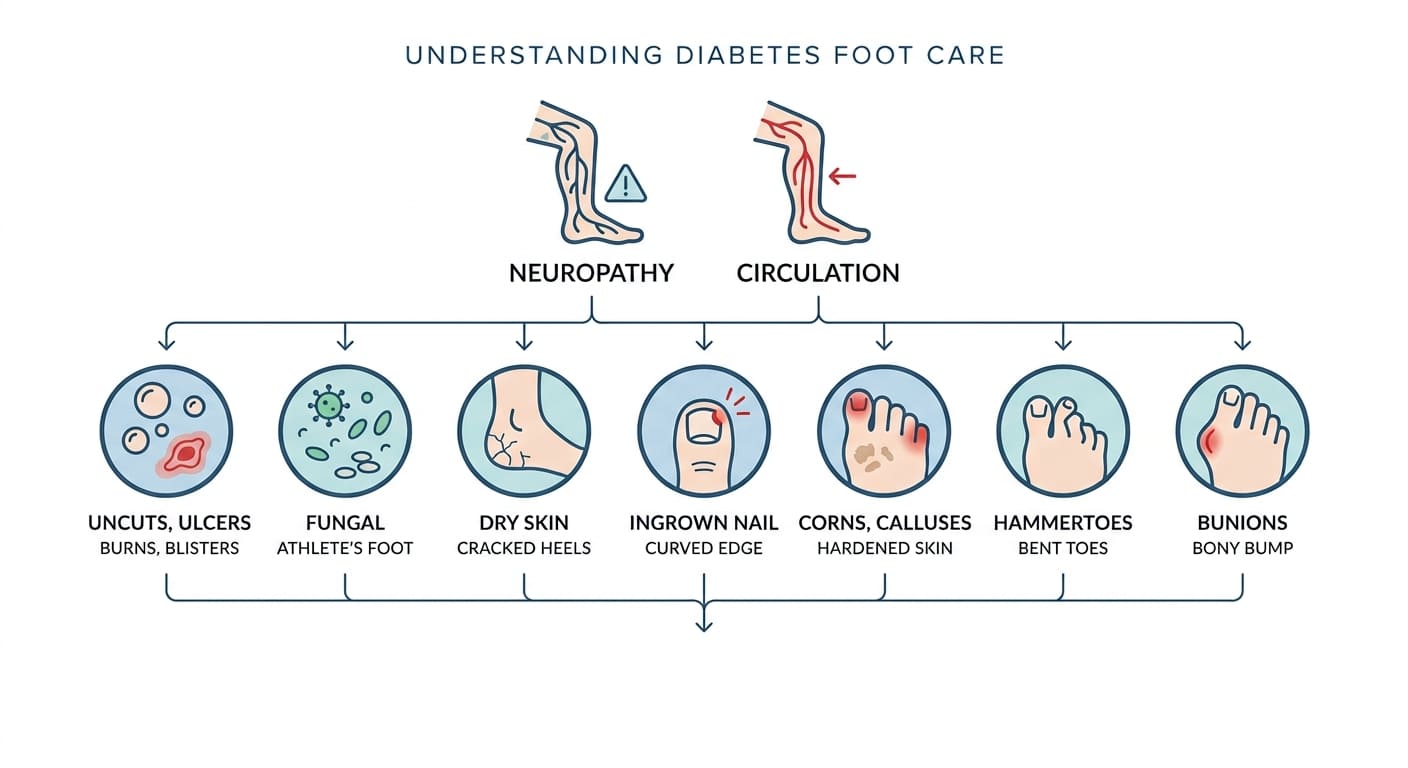
Many foot complications have their roots in the following diabetes-related conditions: neuropathy and poor blood circulation.
The following can be caused or aggravated by diabetes, so you must be careful to prevent them from happening or getting worse.
- Unhealed cuts, ulcers, burns, and blisters.
- Fungal infections.
- Dry, cracked skin.
- Ingrown toenails.
- Corns and calluses.
- Hammertoes and bunions
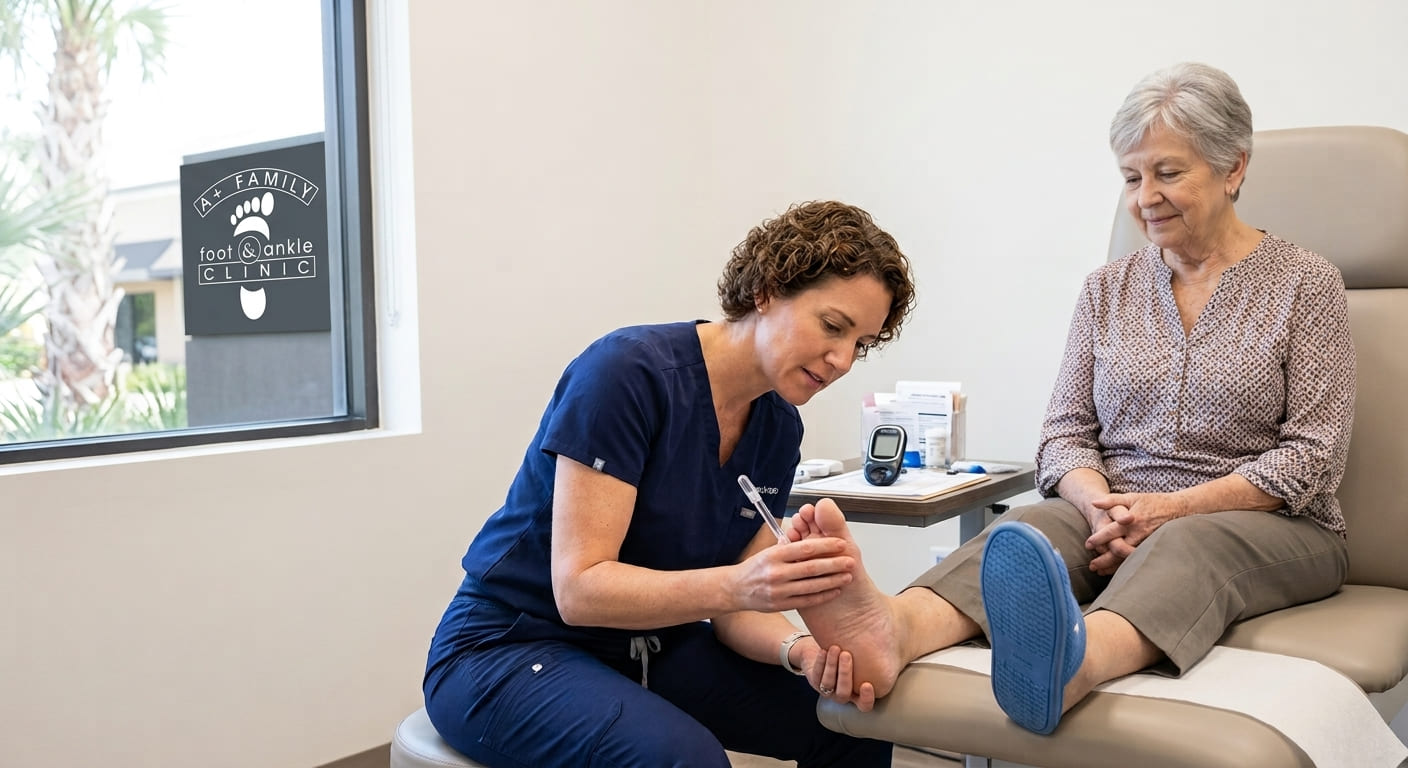
The team behind A+ Family Foot and Ankle Clinic helps patients monitor and treat diabetic foot conditions for Brandon, Florida, residents.
How Diabetes Can Complicate A Foot Condition
Chronic diabetes patients need to be cautious when it comes to their feet. Although each person and case is different, there’s a fairly common series of stages that most of the foot problems related to diabetes happen to follow.
An injury goes unnoticed
Diabetes requires even the slightest foot laceration to be taken seriously right away, especially considering that, due to diabetes-related neuropathy, the pain could have gone unnoticed, as it was not felt by the affected nerve terminations.
Infection
An open wound could result in an infection. When this happens, respond immediately by going to the doctor who’s treating you for a professional diagnosis and treatment.
Impaired healing
When the healing time comes, it should be considered that, for chronic diabetes patients, it will take more time, especially after an infection. But even if the injury was found in time and all the precautions were taken so that no infection occurs, the scarring will still be more difficult and longer.
Why Professional Diabetes Foot Care Matters
Periodic Foot Exams
A minimum of one yearly foot exam for nerve sensation and blood circulation is a must for chronic diabetes patients. Exams such as monofilament testing for the first case and arterial checks for the second one are among the most important and accurate ways of preventing foot-related complications.
Nail and Callus Care
Careful removal of calluses, corns, and thick toenails from feet helps prevent pressure points that could turn into sub-dermal ulcers. Although commonly overlooked, this pedicure care is fundamental to keeping your feet protected from ingrown toenails and skin irritations caused by calluses.
Diabetic Orthotics
Formulated footwear by professionals helps feet be more comfortable and protected from any of the mentioned complications. This is because it reduces friction points, redistributes body weight, and improves blood circulation, all of which are beneficial for your foot’s well-being.
Wound & Ulcer Care
During wound recovery, professional support greatly improves healing. Even after first aid for any foot wound or ulcer, a careful follow-up is needed. A structured recovery plan ensures that, if complications arise, contingencies are already considered and addressed.
FAQ
What are the warning signs to be aware of regarding feet?
For diabetes patients, even the slightest wound on the feet should be treated as soon as possible, so it’s important to visit a medical professional if you notice any of the following signs: redness, warmth, foul odor, and swelling.
How often should someone with diabetes see a podiatrist?
Everyone diagnosed with diabetes should visit a podiatrist at least once per year for a foot exam. But those with other aggravated conditions, such as poor blood circulation, neuropathy, or a propensity for diabetic foot ulcers, need to make more regular visits: every 3 to 6 months.
Why shouldn't diabetic patients trim their own corns or thick toenails?
Any situation that exposes feet to any injury should be avoided, even if it's a daily routine like cutting corns and toenails, and that’s due to the fact that the skin can be wounded without even noticing. Having foot experts like the A+ Family Foot & Ankle Clinic do it for you is how you take care of your feet.

Protecting Your Feet From Diabetes Complications
After a diabetes diagnosis, the lower extremities should be especially taken care of because of the many health complications that can occur. Therefore, it’s never enough to emphasize how important prevention is when it comes to protecting feet from any of the serious consequences that could happen if not handled properly. From regular foot care and proper diabetes orthotics to nail, callus, and ulcer care, keeping your feet healthy is a constant task.
The team of professionals at A+ Family Foot & Ankle Clinic is here to help you care for your feet. Whether you just had an injury to your foot or you want to start preventing any diabetes complications, contact us to learn more about our treatment and therapies.
Call (813)-685-6922 or fill out our online form to schedule an appointment at our clinic in Brandon, FL, with one of the foot specialists in our team.
- Visit Our Offices
We are committed to excellence in foot and ankle care. Our dedicated and compassionate staff are here for your family. Contact us to take the next step towards foot and ankle health.
1462 Oakfield Dr.
Brandon, FL 33511
Fax: (813) 685-8308